Boundary tool
Boundary Scripts
Short sentences for setting limits without turning every no into a courtroom drama.
What this tool does
A boundary is a door, not an argument. These scripts translate vague needs into behavioral limits: what you will do, what you will not do, and what happens if the pattern continues.
Use one emergency sentence: “I am not available,” “I cannot discuss this today,” or simply “No.”
Bad-week version
Use it when
- You overexplain because guilt wants a microphone.
- Someone benefits from your lack of boundaries.
- You need a sentence that closes the door without becoming rude.
How to use it
- Name the recurring pattern that drains you.
- Decide what you will do and what you will not do.
- Choose the shortest true sentence.
- Practice it before the live moment. Ridiculous rehearsal is cheaper than panic.
- Repeat the sentence without adding handles for negotiation.
Worksheet version
Copy these prompts into a notebook, notes app, spreadsheet, or the nearest envelope that is already judging you.
Common traps
- Overexplaining. Every extra sentence can become a handle.
- Threatening a consequence you will not keep.
- Calling control a boundary. Boundaries are about your actions.
Related tools
Read the book
Want the whole system?
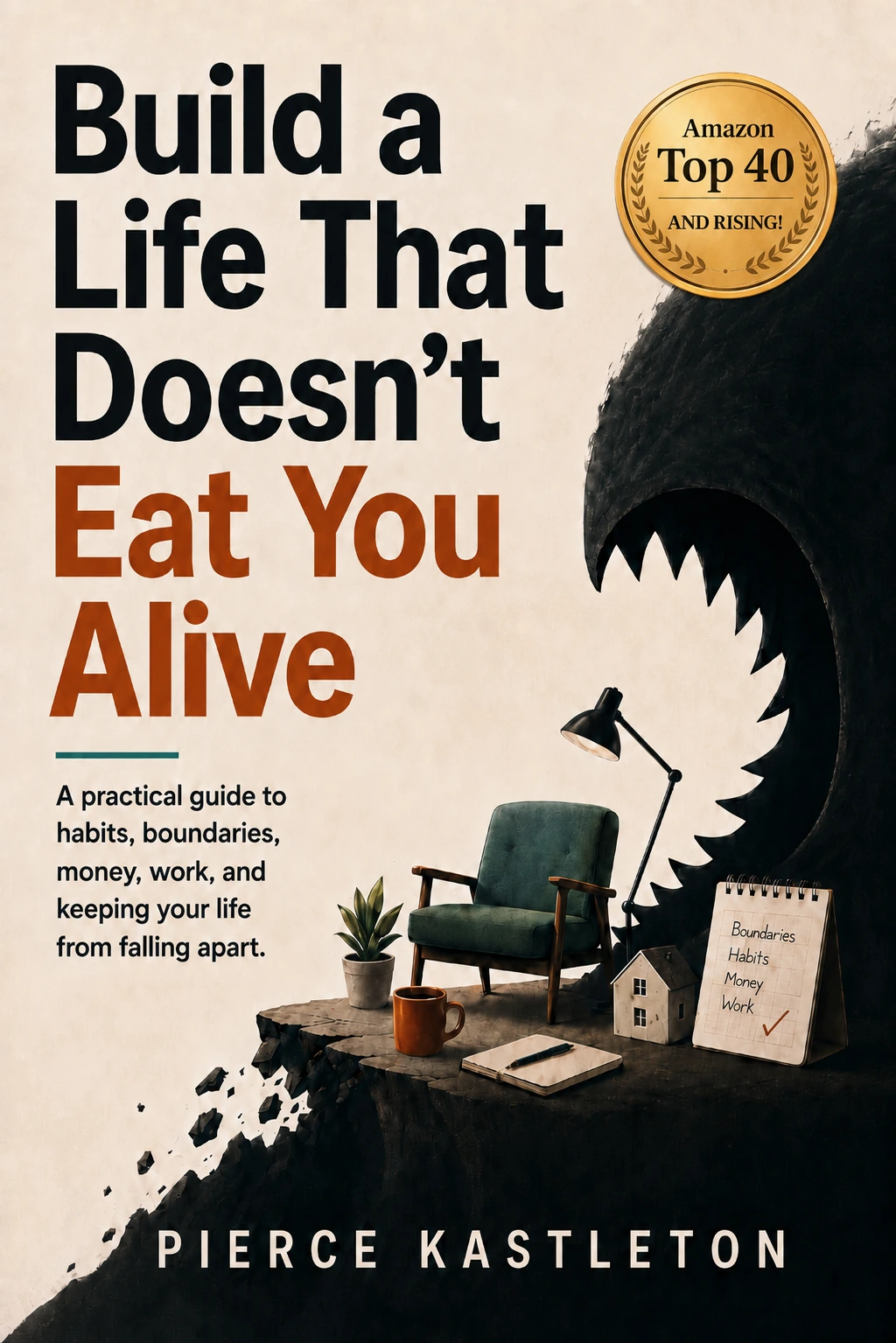
Boundary Scripts is one handle from Build a Life That Doesn't Eat You Alive. The full book connects it to habits, boundaries, money, work, rest, and bad-week repair.