Reader guide
Self-help for people who hate self-help but still need help.
Some readers do not hate help. They hate false cheer, guru speeches, and advice that seems designed for someone with a staff and a color-coded pantry.
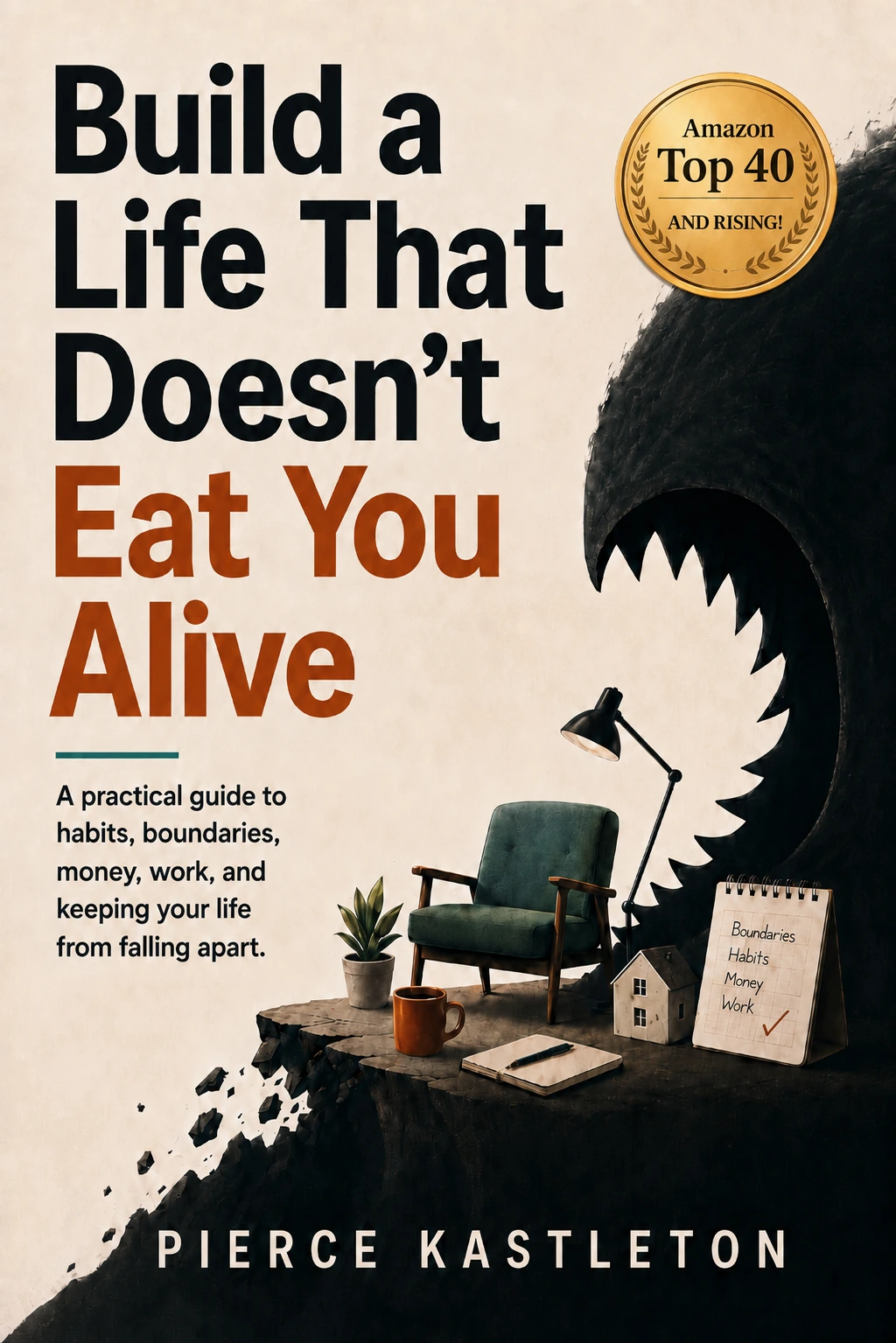
What kind of book helps here?
This book keeps the useful parts of self-help: tools, scripts, repeatable systems, and honest contact with the parts of life that keep making noise.
Build a Life That Doesn't Eat You Alive fits this search because it treats self-help as a practical system: name the leak, lower the friction, use the short script, repair the room, check the money, and restart without shame.
What you get from the book
| Need | How the book handles it |
|---|---|
| A way to sort overwhelm | The Audit of Doom and Six-Room Audit turn vague disaster into categories. |
| Small enough actions | The Two-Button Rule, Button Builder, and Good Enough Standard keep change executable. |
| Words for people pressure | Boundary scripts, Small Scripts for Large Feelings, and the Personal Policy Manual. |
| Bad-week recovery | The Triage Chair, Seven-Day Emergency Reset, Restart Card, and Weekly War Room. |
Best starting tools
Who it is for
- Readers who want practical self-help without fake sunshine.
- Overwhelmed adults who need systems more than speeches.
- People who want tools for habits, boundaries, money, work, rest, and ordinary-life repair.
Find your entry point
Start with one leak, not your whole life.
Read the book page or open the tools hub and pick the part of life making the most noise.